

Environmental Indicators Of Sexual Abuse
An indicator is an alert or warning that you need to requite more attention to a state of affairs. Indicators of abuse can be obvious: for example, a child with the marker of a belt showing on his or her dorsum or burns in the shape of an iron or cigarette tip gives clear support for reasonable cause to suspect child abuse. Often, yet, your suspicion will rest on less obvious physical or behavioral indicators.
Indicators must always exist considered inside the context of how a child behaves, how he or she looks, what you lot know about the child, and the child's family situation and history. Children do not react the same way to similar circumstances and many abused children may not show whatsoever of the indications discussed beneath. All the same, learning to recognize high-risk situations and the signs and symptoms of abuse is an important skill for a mandated reporter. Indicators can alert you to physical, sexual, and mental abuse or neglect.
Indicators of Physical Corruption
Indicators of physical corruption do not, in and of themselves, prove that a child has been abused. Keep in mind that injuries occur accidentally when children play. Physical abuse should exist considered when the explanation does not fit the pattern or frequency of injury. When physical abuse has occurred, indicators can be behavioral equally well as concrete.
Concrete indicators of physical abuse include:
- Unexplained injuries
- Unbelievable or inconsistent explanations of injuries
- Multiple bruises in diverse stages of healing
- Bruises located on faces, ears, necks, buttocks, backs, chests, thighs, back of legs, and genitalia
- Bruises that resemble objects such as a manus, fist, belt buckle, or rope
- Injuries that are inconsistent with a child'south age/developmental level
- Burns
Behavioral indicators of physical abuse include:
- Fright of going dwelling house
- Extreme apprehensiveness or vigilance
- Pronounced aggression or passivity
- Flinching hands or avoiding touch on
- Abusive behavior or talk during play
- Unable to remember how injuries occurred
- Business relationship of injuries is inconsistent with the nature of the injuries
- Fear of parent or caregiver
Shaken Baby Syndrome
Shaken infant syndrome/abusive head trauma (SBS/AHT) is a special type of concrete abuse. It is a term used to describe the constellation of signs and symptoms resulting from violent shaking or shaking and impacting of the caput of an babe or small child.
Infants ii to 4 months of age are at the greatest hazard of injury from shaking, because their brains are softer and their skulls are thinner than those of adults. An baby's head is likewise larger in proportion to its torso than an adult's head and its neck muscles, tendons, and ligaments are weaker than those of an developed.
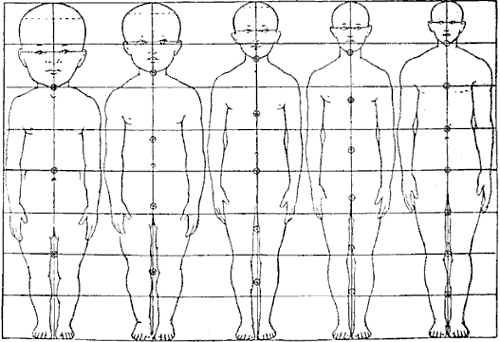
Source: Wikipedia.
Shaking a baby may cause bruising, swelling, and bleeding (intracerebral hemorrhage) of the brain, which may lead to permanent severe brain damage or fifty-fifty death. It usually occurs in children younger than 2 years old but may be seen in children upward to the age of 5 (Reilly & Martin, 2015).
There are diverse signs of SBS/AHT, and in less severe cases the kid may not be seen by a medical professional and properly diagnosed. In most severe cases a child quickly becomes unconscious with "rapidly escalating central nervous system dysfunction." Injuries from SBS/AHT can result in severe disability or death and if you suspect a child has been shaken you should seek immediate medical attending.
Indicators of Sexual Corruption or Exploitation
Recently in Pennsylvania the sexual abuse of children within an institutional setting has been a public concern. The hierarchical structure of institutions tin can give a perpetrator an like shooting fish in a barrel way to exploit the dependence that oftentimes defines relationships between youth and their caregivers (Spröber et al., 2014).
In general, whether in an institution or a familial situation, victims of sexual abuse or exploitation may be threatened with negative consequences in order to keep them silent. Certain factors contribute to silence, including secrecy, helplessness, entrapment, adaptation, and the fearfulness of not beingness taken seriously when revealing abuse (Spröber et al., 2014).
Despite mutual beliefs that sexual abusers are strangers, in more than eighty% of cases the abuser is likely to know the child they are sexually abusing.
Concrete indicators of sexual abuse or exploitation include:
- Slumber disturbances
- Bedwetting
- Pain or irritation in genital/anal area
- Difficulty walking or sitting
- Difficultly urinating
- Pregnancy
- Positive testing for sexually transmitted affliction or HIV
- Excessive or injurious masturbation
Behavioral indicators of sexual abuse or exploitation include:
- Sexually promiscuous
- Developmental age-inappropriate sexual play and/or drawings
- Cruelty to others
- Cruelty to animals
- Fire setting
- Anxious
- Withdrawn
Indicators of Serious Mental Injury
Mental and emotional injury may exist the most prevalent type of child abuse; however, information technology is also the most subconscious, underreported, and least studied (Ba-Saddik & Hattab, 2012). Literature on mental and emotional injury is express because information technology is the most difficult form of abuse to research, due to lack of a consistent definition, and difficulty detecting, assessing, and substantiating the abuse (Ba-Saddik & Hattab, 2012). Researchers have noted that individuals with social anxiety disorder* have college rates of childhood emotional abuse and emotional neglect compared to healthy controls (Kuo et al., 2011).
*Social anxiety disorder: persistent fearfulness of social or performance situations in which an individual is at risk for embarrassment, humiliation, or possible scrutiny by unfamiliar persons (Kuo et al., 2011).
Physical indicators of serious mental injury include:
- Frequent psychosomatic complaints (nausea, stomachache, headache, etc.)
- Bed-wetting
- Self-damage
- Speech disorders
Behavioral indicators of serious mental injury include:
- Expressing feelings of inadequacy
- Fearful of trying new things
- Overly compliant
- Poor peer relationships
- Excessive dependence on adults
- Addiction disorders (sucking, rocking, etc.)
- Eating disorders
Indicators of Serious Physical Neglect
Physical neglect is an act of abuse. It accounts for over iii-quarters of confirmed cases of kid maltreatment in the United states—far more than physical or sexual abuse—merely it continues to receive less attention from practitioners, researchers, and the media (CWIG, 2012).
Identifying serious physical neglect in children may seem more hard than identifying other forms of abuse because fail commonly involves the absence of a certain behavior, rather than its presence. A thorough investigation of the child's safety and run a risk followed by a comprehensive family assessment tin can help determine what kinds of services and supports the family may need (CWIG, 2012).
Concrete indicators of serious physical neglect include:
- Lack of adequate medical and dental care
- Often hungry
- Lack of shelter
- Child's weight is significantly lower than what is normal for his/her age and gender
- Developmental delays
- Persistent (untreated) conditions (e.g. head lice, diaper rash)
- Exposure to hazards (e.g., illegal drugs, rodent/insect infestation, mold)
- Clothing that is dirty, inappropriate for the weather, too small or likewise large
Behavioral indicators of serious physical neglect include:
- Not registered in school
- Inadequate or inappropriate supervision
- Poor impulse control
- Oftentimes drawn
- Parentified behaviors (when children are forced to accept on the part and responsibilities of a parent)
Healthcare providers must differentiate between neglectful situations and poverty. For example, if a family unit living in poverty was non providing adequate food for their children, it would be considered neglect only if the parents were aware of but chose not to utilise food assistance programs. Taking poverty into consideration can forestall unnecessary removals and place the focus on providing concrete services for families to protect and provide for their children (CWIG, 2012).
Risk Factors for Child Abuse and Neglect
Risk factors are characteristics associated with kid abuse and neglect—they may or may not exist direct causes. A combination of individual, relational, community, and societal factors contribute to the risk of child maltreatment. Although children are not responsible for the harm inflicted upon them, certain characteristics have been found to increase their risk of being maltreated (CDC, 2016a).
Individual Run a risk Factors for Victims
- Children younger than 4 years of historic period
- Special needs that may increase caregiver brunt (e.g., disabilities, mental retardation, mental wellness issues, and chronic physical illnesses) (CDC, 2016a).
Individual Risk Factors for Perpetration
- Parents' lack of agreement of children's needs, kid development and parenting skills
- Parents' history of child maltreatment in family of origin
- Substance abuse and/or mental health issues including depression in the family
- Parental characteristics such as immature historic period, low education, single parenthood, large number of dependent children, and low income
- Non-biological, transient caregivers in the home (east.g., mother's male partner)
- Parental thoughts and emotions that tend to support or justify maltreatment behaviors (CDC, 2016a).
Family unit Run a risk Factors
- Social isolation
- Family disorganization, dissolution, and violence, including intimate partner violence
- Parenting stress, poor parent-child relationships, and negative interactions (CDC, 2016a).
Community Risk Factors
- Customs violence
- Full-bodied neighborhood disadvantage (e.g., loftier poverty and residential instability, loftier unemployment rates, and high density of booze outlets), and poor social connections (CDC, 2016a).

Environmental Indicators Of Sexual Abuse,
Source: https://www.atrainceu.com/content/8-recognition-child-abuse-indicators
Posted by: dellingerthisch1945.blogspot.com
0 Response to "Environmental Indicators Of Sexual Abuse"
Post a Comment